Jump to section
- Table of Contents
- Why Priceline Scraping Breaks When You Least Expect It
- Travel data behaves unlike a static catalog
- The maintenance burden starts after launch
- Understanding What Data You Can Actually Extract
- Design records around travel entities
- Plan for international scale
- Navigating Anti-Bot Defenses and Rate Limiting
- Build sessions, not isolated requests
- Handle 429 responses as a control signal
- Build Versus Buy Evaluating Your Options
- When an internal system makes sense
- When a managed service is more rational
- Legal and Compliance Considerations You Cannot Ignore
- Use a documented decision tree
- Maintaining Data Quality in a Volatile Market
- Preserve comparability
- Your Implementation Readiness Checklist
Your Priceline scraper ran cleanly yesterday. This morning, the same jobs return 403 responses, incomplete hotel records, or empty search results. The scheduler still reports success because the process didn’t crash, yet the downstream dashboard is now working with stale or missing travel data.
That failure pattern is normal in travel extraction. Priceline pricing, availability, localization, sessions, and bot defenses change together, so a scraper that only parses page markup won’t remain reliable for long. A production system needs a defensive access strategy, a durable schema, legal review, and monitoring that detects quality problems before business users do.
Table of Contents
Open Table of Contents
- Why Priceline Scraping Breaks When You Least Expect It
- Understanding What Data You Can Actually Extract
- Navigating Anti-Bot Defenses and Rate Limiting
- Build Versus Buy Evaluating Your Options
- Legal and Compliance Considerations You Cannot Ignore
- Maintaining Data Quality in a Volatile Market
- Your Implementation Readiness Checklist
Why Priceline Scraping Breaks When You Least Expect It
A team usually discovers the problem at the worst possible time. A morning price-monitoring job completes, the storage layer accepts its output, and an analyst notices that several destinations have no new rates. A replay produces 403 errors. Switching user-agent strings helps briefly, then the response becomes empty instead. The code still works against yesterday’s fixture, which makes the incident look like a data-processing bug rather than an access failure.
Priceline isn’t a simple catalog. Its corporate history began with formation in 1997, followed by incorporation as priceline.com Incorporated in July 1998, a name change to The Priceline Group Inc. in 2014, and a transition to Booking Holdings Inc. in 2018. Those milestones matter because Priceline-related inventory now sits within a broad, multi-brand travel ecosystem. Booking Holdings reported 1.235 billion room nights, 88 million rental car days, and 68 million airline tickets booked in 2023 in its corporate reporting (Booking Holdings corporate filing).
Travel data behaves unlike a static catalog
A news article or product listing might change when an editor or merchandiser publishes an update. Travel inventory changes because dates, occupancy, fare rules, currency, geography, device context, and availability all influence what a visitor receives. Two requests for the same destination can produce different commercial results without any visible template change.
That volatility creates two separate failure classes:
- Access failure: the server blocks, challenges, or throttles the request.
- Semantic failure: the response arrives, but the scraper assigns the wrong price, room, cancellation rule, or destination to the record.
Teams often monitor only the first class. A parser can return valid JSON while extracting a promotional price instead of the final payable amount.
Practical rule: Treat every successful response as untrusted until its fields, freshness, and business meaning pass validation.
The broader scraping problem is useful context here. A discussion of web scraping challenges covers the general engineering issues around dynamic pages, changing markup, and defensive systems. For teams comparing travel inventory with housing research, curated apartment discovery guides can also help clarify which fields matter for location, amenities, and availability comparisons, although those workflows shouldn’t be assumed to share Priceline’s access behavior.
The maintenance burden starts after launch
A prototype proves that extraction is possible. It doesn’t prove that the pipeline will preserve continuity when Priceline changes a page, modifies a challenge flow, or alters the way search results load. Production ownership includes replay tests, response classification, proxy health, session handling, schema versioning, and alerts for suspiciously complete but incorrect output.
The right mindset is operational rather than tactical. You’re not collecting a page. You’re maintaining a measurement system against a changing commercial interface.
Understanding What Data You Can Actually Extract
A production schema should be defined before browser automation begins. A Priceline hotel scraper can return structured ratings, reviews, room types, amenities, photos, policies, GPS coordinates, and neighborhood data, instead of leaving analysts to interpret raw HTML. Its documentation also describes discovery by URL, property ID, or city across 107 major cities worldwide (Priceline hotel scraper documentation).
The extraction layer should preserve two versions of each field: the source evidence and the normalized value. Store the source URL, property identifier, retrieval timestamp, locale, currency, and a reference to the raw response beside the interpreted record. That separation pays off when Priceline changes markup or when a normalization rule needs correction. You can reprocess retained evidence without requesting the source again.
Design records around travel entities
Hotel records need a stable entity model. Use the hotel ID as the primary identity when it is available, then attach the property name, coordinates, neighborhood, rating, review details, amenities, photos, and policies. The stable hotel ID at the end of a Priceline URL can support deduplication and incremental refresh logic, even when names or descriptions change.
Keep rooms and rates separate from the hotel entity. One property may expose several room types, cancellation conditions, occupancy rules, meal inclusions, and payment terms. Flattening those offers into one hotel row makes later comparisons unreliable, because a new room offer can look like a change to the property itself.
Flight and car-rental records require different keys and context. A flight observation should connect the search parameters to the itinerary result. A vehicle observation should retain pickup and return locations, dates, vehicle class, supplier information, and rental conditions. A shared top-level model is useful for pipeline operations, but forcing all three verticals into one generic “listing” object will discard business meaning.
Plan for international scale
Booking Holdings reported $186.1 billion in gross travel bookings in 2025, up 12.3% year over year, after $165.6 billion in 2024 and $150.6 billion in 2023 (Booking statistics and company data). The same source places Priceline’s earlier scale at about $50 billion in bookings in 2015, with nearly 87% outside the United States. These figures do not determine request volume, but they reinforce a practical design requirement: destination, currency, language, and market context must be captured from the first collection.
Every record should answer four operational questions:
- What entity was observed? A property, room, flight, or vehicle, with a stable identifier where available.
- Under what search context? Destination, dates, occupants, pickup details, locale, and currency.
- What commercial offer appeared? Displayed amount, available fees, cancellation terms, inclusions, and availability.
- When and how was it observed? Timestamp, access route, parser version, and response status.
This structure prevents downstream users from treating a volatile search result as a permanent fact. It also gives engineering and analytics teams enough context to detect price changes, separate offers from entities, and audit questionable records.
Navigating Anti-Bot Defenses and Rate Limiting
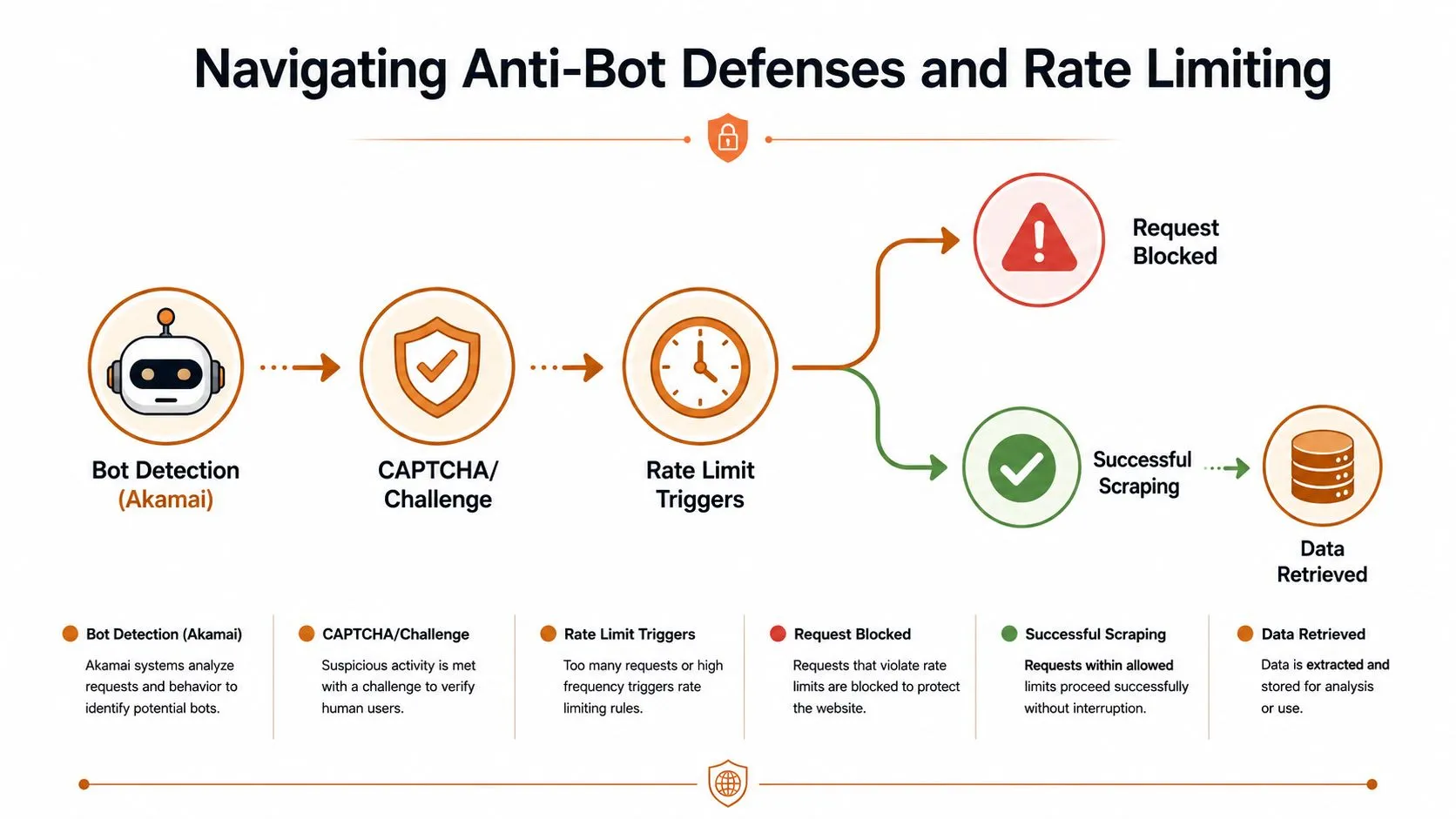
Independent testing in 2026 rated Priceline scraping at medium difficulty, 3/5, citing Akamai Bot Manager and rate limiting as major contributors (Priceline scraping difficulty assessment). In practice, a datacenter IP paired with a minimal HTTP signature often looks unlike a normal browser session. The result may be a 403, a challenge page, or a 429 after repeated requests.
The goal isn’t to send requests as fast as possible. It’s to make access controlled, observable, and respectful of the source.
Build sessions, not isolated requests
A browser-like workflow needs continuity. Persist cookies for the duration of a coherent search session, keep headers internally consistent, and avoid changing every request in ways that create an implausible identity. Browser automation can help when the target renders key content client-side, but it also adds resource cost and creates more state to manage.
Residential IP capacity is often more suitable than datacenter routing for this type of workload, particularly when the project needs geographically varied searches. Rotation should follow a deliberate policy, not a random shuffle. Reuse a healthy session for related requests, retire a route after repeated challenge responses, and record the geography associated with each observation so analysts can identify localization effects.
Handle 429 responses as a control signal
A 429 isn’t an invitation to retry immediately. Use exponential backoff with jitter, cap retries, and classify the response before placing it back in the queue. If the same route repeatedly receives challenges, reduce concurrency or quarantine it rather than allowing the queue to amplify the problem.
Useful operational signals include:
| Signal | What it can indicate | Response |
|---|---|---|
| 403 responses | Access policy or bot detection trigger | Pause the route and inspect the response |
| 429 responses | Rate pressure | Back off and reduce concurrency |
| Empty result sets | Challenge content or parser drift | Validate body shape and required fields |
| Sudden field loss | Page or payload change | Open an incident for parser review |
| Freshness gaps | Queue, routing, or source failure | Alert by destination and run |
A Playwright anti-bot guide provides broader browser-automation context, but Priceline-specific behavior still needs direct testing and monitoring. Similar operational thinking applies to other live tracking systems, including tools that track a cruise ship, where freshness, geographic context, and intermittent source responses can affect the usefulness of the final dataset.
Operational insight: A scraper that has no response classification, route health, or freshness alerting isn’t stable. It’s merely lucky.
Build Versus Buy Evaluating Your Options
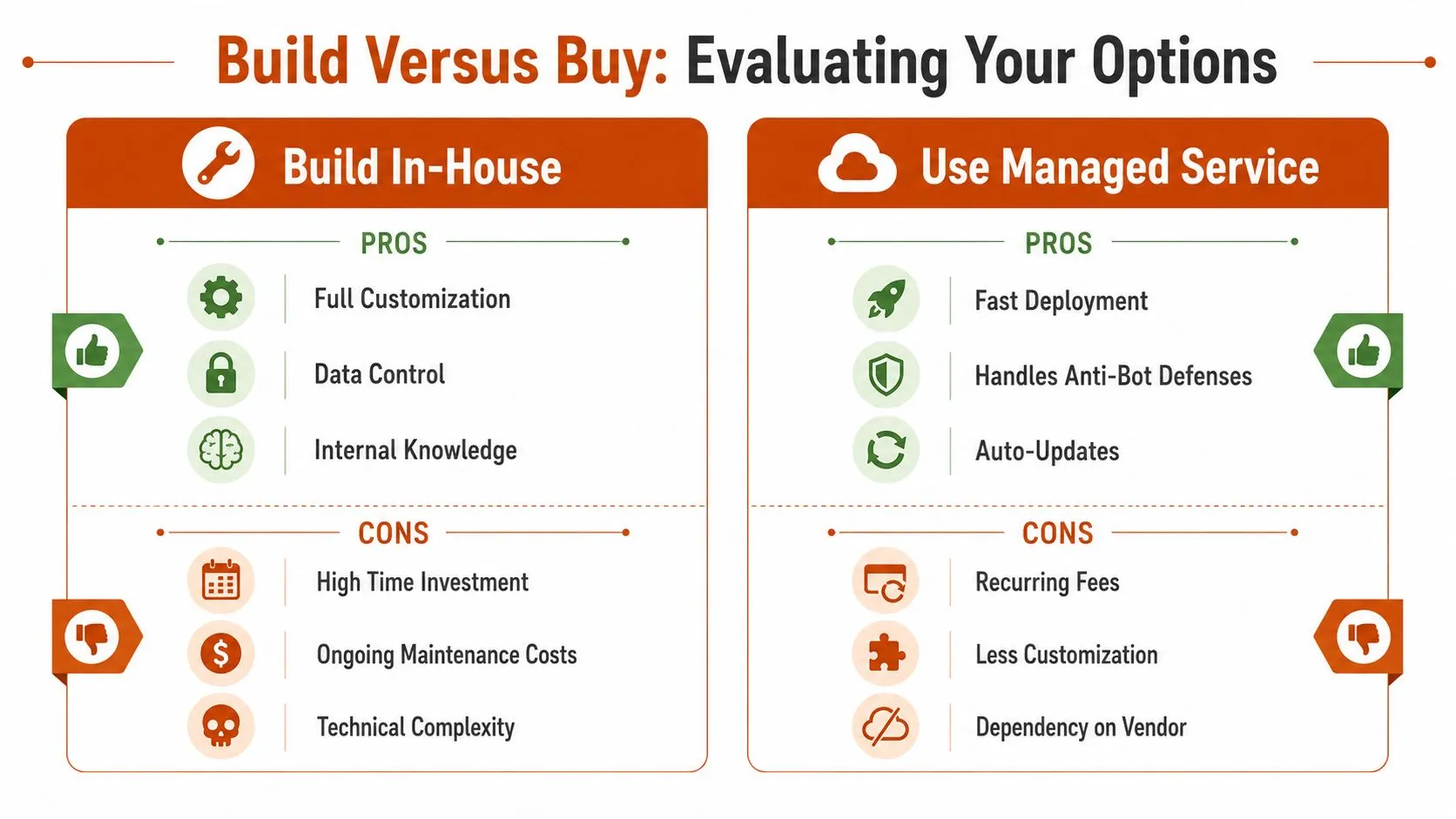
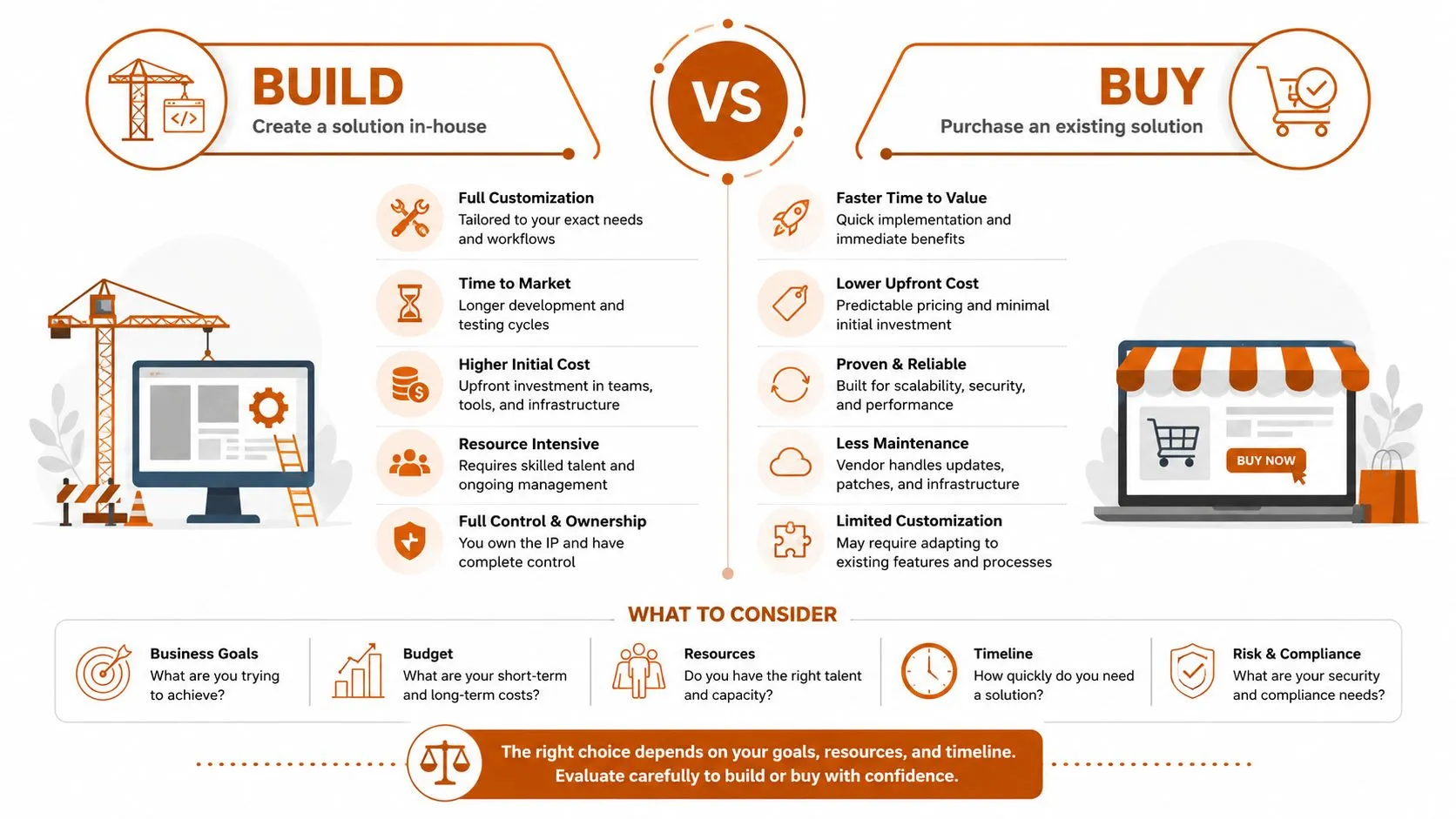
The build-versus-buy decision should use total operating cost, not just the first implementation estimate. An in-house Priceline scraper gives your team control over field selection, orchestration, storage, and deployment. It also makes your team responsible for every change in access behavior, browser compatibility, proxy health, parser regression, and alert response.
A managed service reverses that allocation. You surrender some infrastructure control and accept a recurring commercial relationship, while the provider handles much of the operational surface. Neither choice is universally correct.
When an internal system makes sense
Build in-house when the data model is central to your product and your organization already operates browser infrastructure, queues, observability, and data governance. Internal ownership is valuable when you need custom joins, unusual search logic, private downstream integrations, or strict control over retention and replay.
The apparent savings can disappear when maintenance interrupts product work. Engineers may spend time diagnosing route failures, inspecting challenge pages, updating selectors, and comparing output against known travel scenarios. Those tasks rarely appear in the prototype estimate, yet they determine whether the feed remains useful.
When a managed service is more rational
A managed provider is often a better fit when the business needs recurring delivery but doesn’t want to operate the collection layer. WebscrapingHQ provides managed extraction operations, custom scraper development, monitoring, retries, proxy management, anti-bot mitigation, and scheduled delivery in formats such as CSV, JSON, webhooks, and storage drops. It should still be evaluated against your required Priceline fields, access method, geography, freshness, compliance posture, and recovery expectations.
Use a comparison of web scraping companies in the USA as a procurement starting point, not as a substitute for a technical proof of feasibility. Ask each vendor to explain how it handles schema changes, failed observations, source evidence, duplicate properties, and partial delivery.
A simple decision table helps:
| Requirement | In-house tendency | Managed-service tendency |
|---|---|---|
| Specialized schema | Strong fit | Confirm customization |
| Rapid pilot | Slower setup | Faster deployment |
| Continuous anti-bot maintenance | Internal burden | Provider responsibility |
| Deep infrastructure control | Strong fit | More limited |
| Predictable recurring delivery | Requires operations team | Core service model |
| Vendor dependency tolerance | Lower dependency | Higher dependency |
For travel operators, a 2026 booking software guide can help separate booking workflow requirements from intelligence and monitoring requirements. Those are related, but they’re not the same product problem.
Legal and Compliance Considerations You Cannot Ignore
“Is scraping Priceline legal?” is too broad to guide an enterprise launch. The practical answer depends on how you access the site, how much you request, where your organization operates, whether the data is public, and whether authentication is involved. A neutral legal summary notes that there’s no blanket U.S. rule making scraping illegal, and that public-data scraping is generally more defensible under the hiQ v. LinkedIn precedent. It also identifies higher risk when terms prohibit automated access, requests occur behind login walls, or traffic burdens the site (legal considerations for travel and airline scraping).
That doesn’t create a universal permission. Public availability is one factor in a risk assessment, not a replacement for counsel.
Use a documented decision tree
Start by identifying the exact data. Public hotel descriptions and publicly displayed rates raise different questions from account-specific prices, traveler profiles, payment details, or information revealed only after authentication. Exclude personal and sensitive data unless there’s a clear, reviewed necessity and lawful basis.
Then document the access method. Record whether the system uses ordinary public pages, browser rendering, an account, third-party access, or a vendor. Note the request frequency, geographic distribution, retry behavior, and safeguards against excessive load.
Finally, review contractual and jurisdictional exposure. Terms of service may restrict automated access even when a page is publicly viewable. Your legal team should assess applicable laws in the jurisdictions where the company, infrastructure, customers, and data subjects are located.
A practical review packet should contain:
- Purpose statement: What business decision requires the data?
- Field inventory: Which fields are collected, and which are explicitly excluded?
- Access description: How does the system reach each page or endpoint?
- Traffic controls: How do concurrency, backoff, and monitoring limit burden?
- Retention policy: How long are raw responses and normalized records kept?
- Escalation process: Who pauses collection when counsel or the source raises an issue?
The overview of legal risks in web scraping can support that internal review. Don’t treat a vendor’s compliance statement as a complete answer for your organization. Get the access design, data fields, geography, and usage documented before production traffic begins.
Maintaining Data Quality in a Volatile Market
A Priceline scraper can collect fresh records and still produce a misleading time series. Travel prices and availability can change rapidly, so a rate observed on one search isn’t automatically comparable with a rate observed later. The dataset needs enough context to explain why two observations differ.
Start with an immutable observation layer. Store the retrieval timestamp in a consistent timezone, the search dates, occupancy, destination, locale, currency, property or itinerary identifier, and the exact offer conditions. Then build a normalized analytical layer that converts currencies through a documented process, separates taxes and fees where the source exposes them, and preserves cancellation and payment terms.
Preserve comparability
A price comparison should use matching conditions. A flexible room and a prepaid room aren’t interchangeable. A refundable flight and a restricted fare shouldn’t share a trend line. If the source changes its display, retain the original raw value and add a parser version to the normalized record.
Outlier detection should flag suspicious changes rather than erase them. A sudden price shift may reflect genuine availability movement, a currency issue, a partial response, or a parser mistake. Route each anomaly to review with its search context and source evidence attached.
Schema versioning matters as much as parser versioning. Add fields without changing the meaning of existing ones. When a field moves from “displayed total” to “base amount,” create a new semantic field or version rather than overwriting historical data.
The operating model should include:
- Timestamp normalization: Make retrieval and travel dates unambiguous.
- Currency handling: Record source currency and conversion assumptions.
- Offer identity: Tie prices to room, fare, vehicle, and policy conditions.
- Freshness controls: Mark records that exceed the intended observation window.
- Quality gates: Reject records missing required identifiers or core commercial fields.
- Historical replay: Reprocess stored evidence when parser logic changes.
A practical data validation guide can help formalize those gates. The business payoff isn’t merely cleaner storage. Stable observations let analysts distinguish market movement from collection noise, which is essential for forecasting, competitive intelligence, and machine-learning features.
Your Implementation Readiness Checklist
Before writing scraper code, confirm that the project has an owner, a defined decision, and a measurable delivery requirement. “Collect Priceline prices” isn’t specific enough. Define the vertical, destinations, dates, fields, refresh pattern, output format, acceptable staleness, and response to missing data.
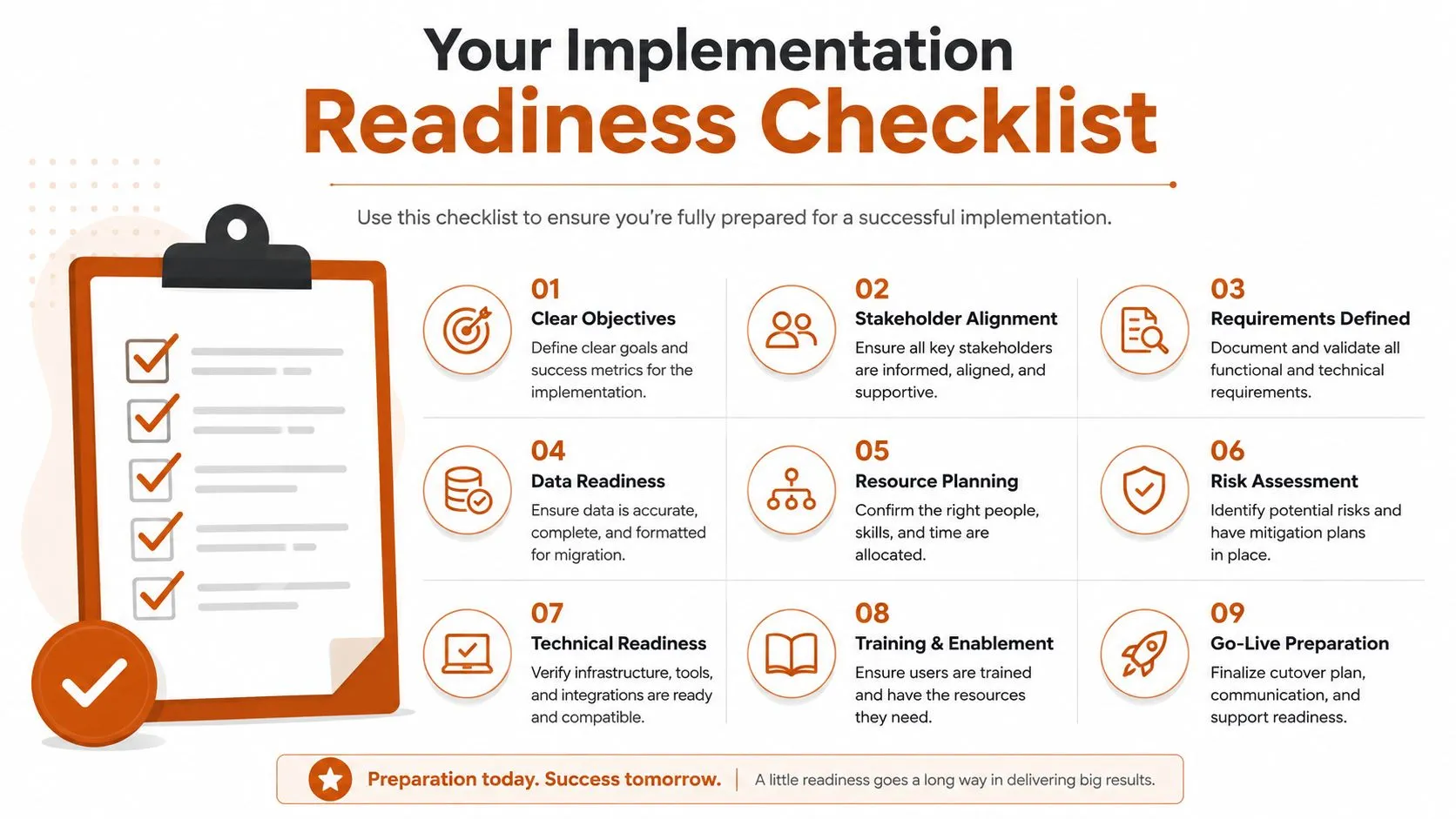
Use this launch checklist:
- Clarify the use case: Identify the business decision and the user who’ll act on the output.
- Define the schema: Separate entities, offers, search context, raw evidence, and normalized values.
- Test feasibility: Run controlled samples across relevant destinations, dates, locales, and device contexts.
- Choose access architecture: Decide whether browser rendering, sessions, residential routing, or a managed collector is appropriate.
- Set traffic controls: Establish concurrency limits, retry classification, exponential backoff, and route quarantine.
- Create quality gates: Validate identifiers, required fields, price semantics, freshness, and duplicate handling.
- Document legal posture: Review terms, public versus authenticated access, jurisdiction, retention, and escalation.
- Instrument operations: Alert on 403s, 429s, empty results, field loss, freshness gaps, and abnormal distributions.
- Plan ownership: Assign responsibility for parser updates, incident response, schema changes, and vendor review.
Run a pilot that tests failure recovery, not only successful extraction. The most valuable result is a clear answer about what the system does when Priceline changes its response, a route is throttled, or a required field disappears.
WebscrapingHQ provides custom and managed web data operations for teams that need structured, recurring extraction, including scraper development, monitoring, retries, proxy management, anti-bot mitigation, schema controls, and scheduled CSV or JSON delivery. Visit WebscrapingHQ to discuss a Priceline data pipeline built around your fields, geography, refresh needs, and compliance review.
Want this done for you?
Send us the URLs. We'll quote it in 24 hours.
Paste the URL(s) you want scraped. We'll reply within 24 hours with a feasibility check and a ballpark quote.