Jump to section
- 1. Integral Ad Science (IAS)
- Where broad coverage helps, and where it adds work
- 2. DoubleVerify (DV)
- Ask what each integration actually exposes
- 3. HUMAN Security, Ad Integrity and Advertising Protection
- Make the explanation part of the acceptance test
- 4. Pixalate
- Confirm which product owns the workflow
- 5. Zefr
- Use suitability rules, not a blanket block list
- 6. Protected by Mediaocean
- 7. Fraudlogix
- Don’t make an IP score your verdict
- 8. Anura
- Put false positives in the pilot scope
- 9. Lunio
- Keep channel reports in the comparison
- 10. mFilterIt
- How the Ten Ad Verification Platforms Compare by Scope, Coverage, Pricing Visibility, and Fit
- Matching the Verification Tool to the Problem Before the Vendor Call
A co-op team discovers that some dealer-placed display and video impressions never rendered in view. The bureau now has to show the manufacturer what happened, separate measurable delivery problems from policy violations, and explain which dealer placements need follow-up. One reported impression total won’t answer those questions.
Ad verification tools solve different problems: invalid traffic, viewability, brand suitability, or click-level fraud. Choosing a platform before separating those risks can leave a bureau paying to measure the wrong thing, or missing evidence it needs to resolve a co-op dispute. The tools below are grouped by the problem each is best suited to address, with practical limits alongside their strengths.
Viewability has a defined baseline: the Media Rating Council’s viewable impression guideline says a display ad needs at least 50% of its pixels on screen for one continuous second, while video requires at least 50% visible for two continuous seconds. Those thresholds help distinguish an ad request from a measurable opportunity to see an ad, but they don’t establish whether the placement met a dealer’s brand rules or generated a genuine lead. This list compares ten platforms, notes where sales-led pricing limits easy comparison, and flags what to validate before buying. For a related look at tools for detecting fraudulent affiliate traffic, the same principle applies: match the tool to the risk.
1. Integral Ad Science (IAS)
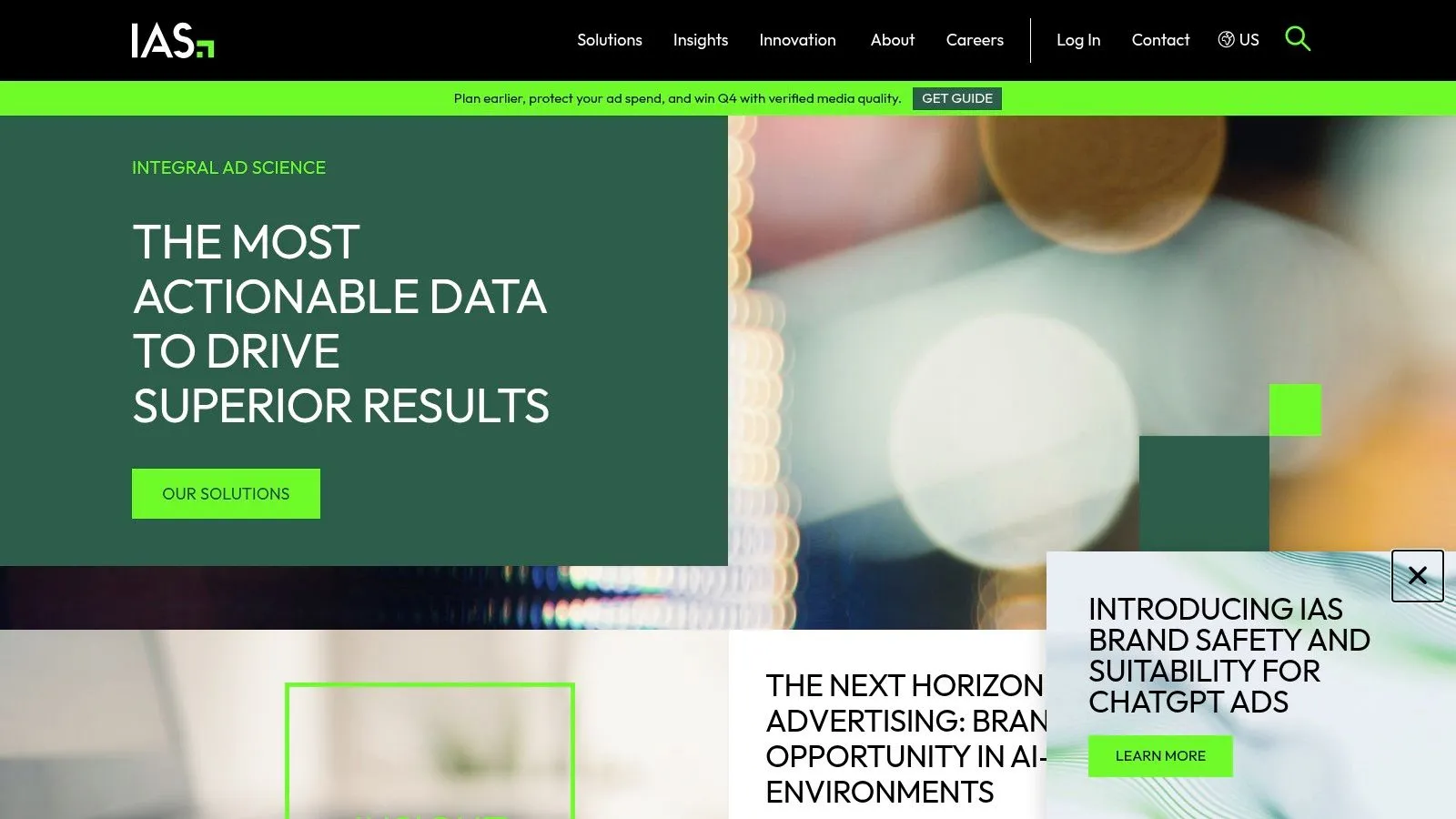
IAS is a practical starting point when a bureau needs one verification partner across several media types. Its platform combines invalid-traffic detection, viewability measurement, brand safety and suitability, and contextual targeting across open web, social, mobile, and connected TV. Depending on the integration, teams can use pre-bid controls to avoid risky inventory and post-bid reporting or blocking to review delivery.
The breadth is useful, but it doesn’t make every metric interchangeable. The MRC’s reconciliation guidance found that among campaigns with more than 100,000 measured viewable impressions, 63% of campaigns had vendor differences within the accepted range of less than 10%. For campaigns outside that range, the median vendor difference was 23%, and the weighted average difference was 34% per campaign, according to the MRC viewability reconciliation guidance. Ask IAS and any competing vendor to document counting rules and explain how they reconcile served, viewable, and invalid impressions.
Where broad coverage helps, and where it adds work
IAS integrates with major buying platforms, including pre-bid media-quality controls in Display & Video 360. That can reduce the gap between measurement and action. G2 reviewers praise its measurement and support, but reporting can take effort to work through, and setup may involve tags, integrations, and reporting configuration.
For co-op audits: Confirm that the report can preserve a dealer or placement identifier. Campaign-level summaries alone may not support a manufacturer dispute.
Pricing isn’t publicly listed, and platform targeting may incur additional fees. Before signing, ask which channels, controls, and exports are included in the proposed scope. A bureau that needs recurring evidence of dealer-page compliance may also need a separate capture workflow, such as the one described in this ad verification bureau case study. Visit IAS to confirm current integrations and available reporting.
2. DoubleVerify (DV)
DoubleVerify combines several media-quality checks in one workflow. Its DV Authentic Ad framework assesses whether an ad was viewable, human, suitable, and served in the intended geography. DV Pinnacle brings together fraud and invalid-traffic measurement, brand-suitability controls, viewability measurement, and reporting, with pre-bid and post-bid workflows where supported.
Connected TV shows why teams may want those checks together: a delivered impression does not confirm that a genuine viewer saw the placement. DoubleVerify reported that connected-TV bot fraud increased 69% year over year in 2022. Its connected-TV ad-fraud announcement also compared an 11.2% fraud rate for campaigns without verification with 0.6% for protected campaigns. These are company-reported measurements, not a forecast of risk for a particular dealer campaign.
Ask what each integration actually exposes
DV reports MRC accreditation across multiple verification metrics and environments. Accreditation provides useful context, but actual measurement depends on the media platform and implementation. Confirm which channels and metrics are active for your campaign, and whether reports show the evidence behind each flag.
The trade-off is fit: DV is oriented toward enterprise buyers, so access and pricing may not suit a small advertiser, and coverage varies by channel and integration. Bureaus should check whether exports include the detail needed to reconcile placements with dealer, creative, and co-op records. WebscrapingHQ’s ad verification use-case overview describes operational needs that can involve reconciling placement data with compliance records. Check DoubleVerify for current availability in the media environments you buy.
3. HUMAN Security, Ad Integrity and Advertising Protection
HUMAN is the focused option when traffic authenticity is the first concern, especially when a team needs to understand why a visitor or impression was flagged. Its advertising products span pre-bid and post-bid fraud controls: MediaGuard supports pre-bid protection, FraudSensor provides post-bid analysis, and Ad Click Defense targets click fraud. The Ad Integrity Suite combines invalid-traffic intelligence with brand safety, suitability, and viewability signals.
That combination addresses a real measurement weakness. In 2024, 63% of surveyed marketers prioritized advanced invalid traffic concerns, but only 43% were confident they weren’t paying for advanced invalid traffic or non-human impressions or clicks, according to the Mediaocean survey reported by Advanced Television. For a bureau, the useful question isn’t only whether traffic was blocked. It’s whether the vendor can provide a reason code that an advertiser or dealer can review.
Make the explanation part of the acceptance test
HUMAN emphasizes behavioral signals, including traffic designed to imitate human activity. Its dashboards, exports, and APIs can support reporting, while reason codes help teams investigate flags instead of treating them as unexplained verdicts. Click-focused tools also make it relevant to performance marketers who need to examine more than served impressions.
The trade-off is implementation effort. Some products need technical integration, tags, or vendor assistance, and pricing isn’t public. HUMAN announced the Ad Integrity Suite in June 2026, so buyers should confirm its current availability, integrations, and exact included capabilities rather than assuming every component is ready for every workflow. Test the false-positive review process with traffic patterns your team recognizes. See HUMAN Security’s advertising protection products for current product details.
4. Pixalate
Pixalate is built for teams that want to examine fraud risk across programmatic, mobile-app, and connected-TV inventory. Its products include post-bid analytics, pre-bid blocking, publisher and seller ratings, and an Ad Fraud API. That makes it relevant when the audit question is about where suspicious inventory came from, not just how many impressions were reported.
The distinction between pre-bid and post-bid matters operationally. Pre-bid blocking can keep inventory that meets a risk rule out of a campaign; post-bid analytics help explain what delivery looked like after the fact. A 2024 global media-quality benchmark found that fraud rates for protected campaigns fell 9.8% year over year to 0.7%, while unprotected campaigns increased 19.0% year over year, as reported in the IAS global media-quality benchmark. That supports treating fraud controls as an active campaign setting, not merely a retrospective score.
Confirm which product owns the workflow
Pixalate offers API-based access alongside platform products, and its FAQ describes a free account for its API suite. That may suit a technical team that wants to pass risk data into its own systems. But different offerings serve different buyer and seller workflows, and full-platform pricing isn’t clearly listed on general product pages.
Treat risk ratings as vendor assessments to validate against your own standards. Ask for the denominator, coverage, and timing behind each reported rate, and retain impression-level identifiers where available. Teams that investigate mobile inventory may also need to understand how app context is collected; this background on mobile app scraping services relates to the separate task of gathering observable app information. Review Pixalate to confirm which product fits your buyer or bureau workflow.
5. Zefr
Zefr is the specialist choice when the risk sits inside video or social content, rather than only on a page or domain. Its classification looks at video, audio, imagery, text, and metadata, with AI analysis alongside human review. That allows teams to assess content context beyond a keyword match, which can matter when a brand’s policy distinguishes between sensitive subject matter and harmful treatment of that subject.
The need for content-level review is growing as placements appear in more formats. Industry reporting says the Media Rating Council restricted property-level services from claiming brand-safety capabilities unless they analyze image, video, and audio content at the content level. The same report found that 83% of respondents considered ad-fraud measurement important for evaluating retail-media performance, according to PPC Land’s coverage of media experts and brand safety. For co-op managers, content-level classification can be more informative than a domain-only label when a dealer ad appears alongside video or social content.
Use suitability rules, not a blanket block list
Zefr offers reporting for YouTube and other supported platforms, category-based reporting, and customizable policies. Those options can help a manufacturer define what’s acceptable for its brand, but the team still needs to decide where the line sits. Brand safety concerns content that violates a hard exclusion; brand suitability evaluates whether content fits a particular brand’s policy and context.
Zefr doesn’t replace a full-suite vendor for every channel and metric. Confirm platform access, campaign-level availability, and report fields before committing, especially if the bureau needs to compare performance across publishers. For teams building context around YouTube placements, this guide to scraping YouTube videos concerns a separate data-collection task, not a substitute for verification. Check Zefr for its current supported platforms and moderation options.
6. Protected by Mediaocean
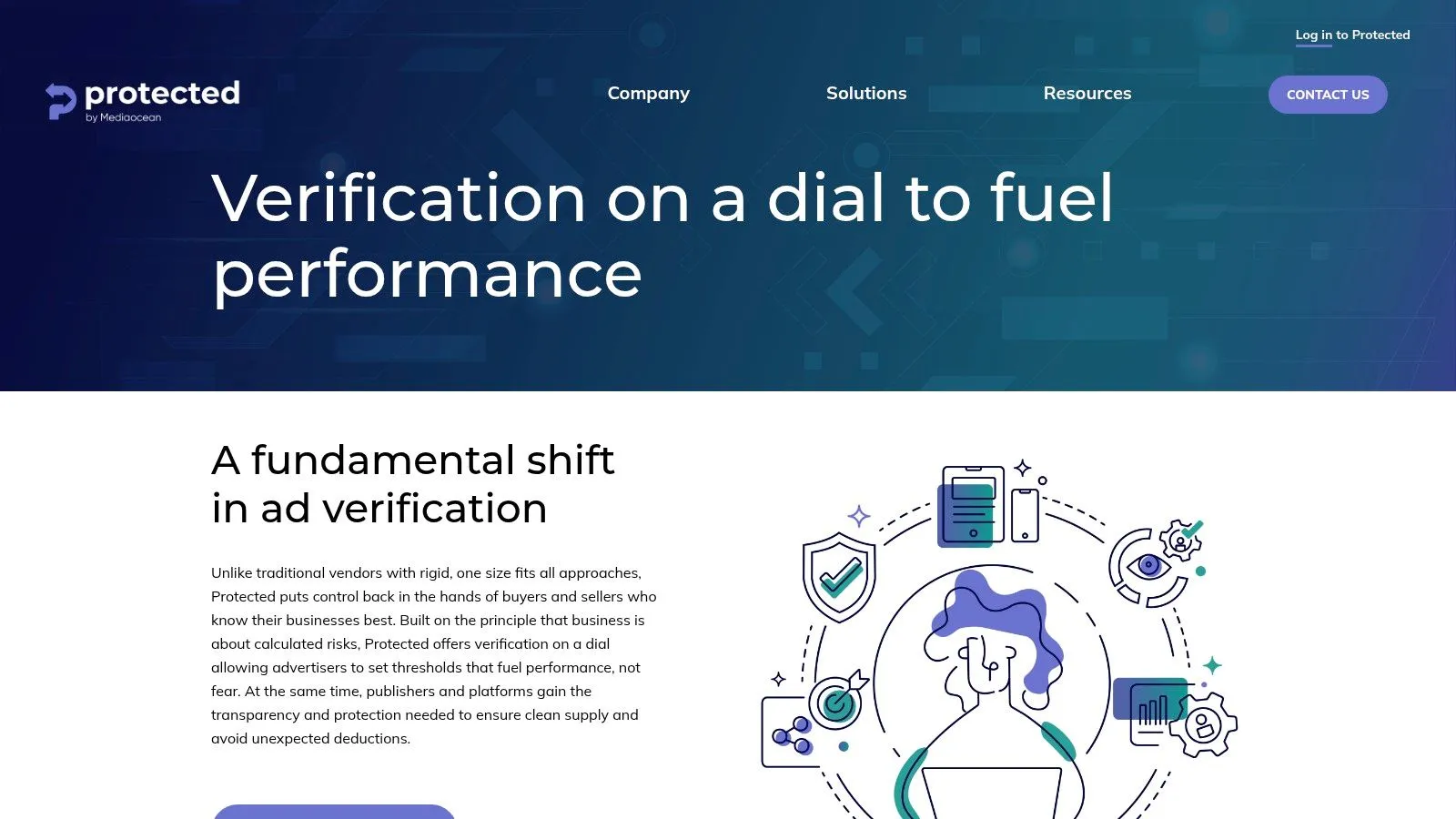
Protected by Mediaocean takes a configurable verification approach for buyers and sellers. Its published scope includes rendered-impression measurement, viewability, and advanced invalid-traffic detection and filtration across desktop, mobile web, mobile apps, and connected TV. Teams can set risk thresholds to reflect an agreed standard instead of treating every flagged impression as the same kind of failure.
That flexibility can help co-op programs where advertisers, agencies, publishers, and dealers need to resolve quality questions using shared definitions. The platform’s buyer-and-seller orientation may support those conversations, particularly when the parties need to distinguish an impression that failed measurement criteria from one that appears fraudulent. Its published materials include accreditation and certification information, which buyers should review alongside the specific metrics in scope.
A configurable threshold is only useful when every party can see what it changes. Put the rule, measurement method, and reason codes in the audit specification.
Pricing isn’t public, and the precise product coverage can vary. Ask which environments and metrics are included in the specific product and accreditation, and whether the workflow fits your existing Mediaocean or partner setup. Don’t assume that a broad platform description means every placement gets the same measurement treatment. Visit Protected by Mediaocean to confirm available controls and integrations.
7. Fraudlogix
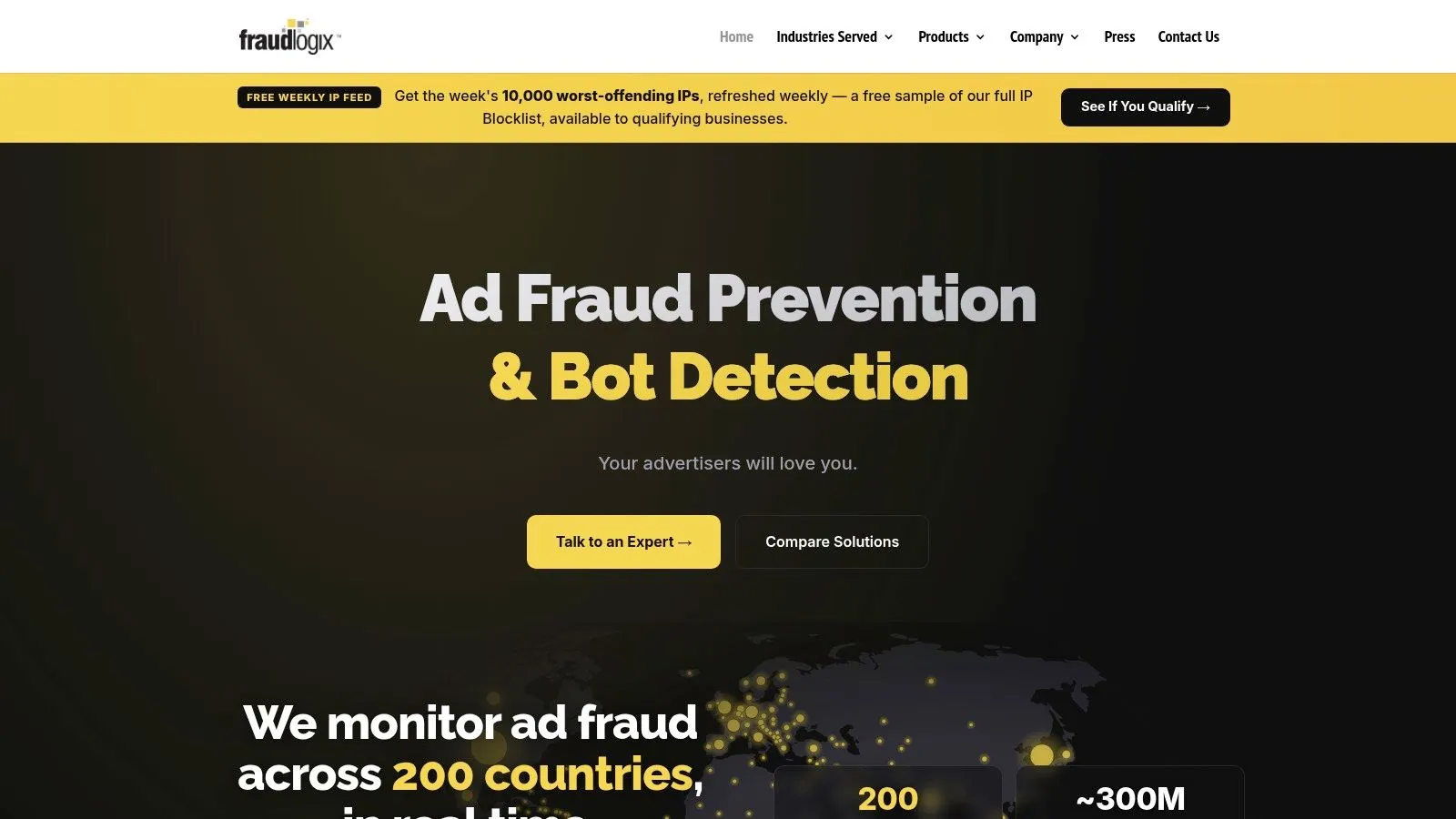
Fraudlogix is a narrower choice for traffic-risk data and invalid-traffic controls. Its products include an IP Risk Score API, pre-bid IP blocklists, and post-bid programmatic analytics. That mix can suit ad networks, platforms, affiliate programs, and performance teams that need to score or filter traffic at different points in a campaign.
A useful implementation can combine real-time lookup, pre-bid or pre-click blocking, and post-bid review. Fraudlogix also offers a free IP-check tool, and qualifying businesses can request a free weekly IP feed. Those entry points may help a team evaluate whether the signals fit its traffic, but they don’t replace a controlled validation process.
Don’t make an IP score your verdict
An IP-based risk signal is one input, not a complete finding of fraud. Shared networks, changing addresses, and other traffic attributes can complicate interpretation, so combine the score with session behavior, conversion patterns, and campaign context. Fraudlogix is more focused on authenticity than on broad viewability or brand-suitability measurement, so a bureau may need another platform for those questions.
Paid-offering details and pricing are largely sales-led. Before deployment, ask how the product handles false positives, what fields it returns, and whether the data can be tied back to a specific dealer campaign. Teams that operate data collection infrastructure may also find this guide to avoiding blocks while scraping relevant to a separate technical challenge. Review Fraudlogix for API, feed, and integration details.
8. Anura
Anura is aimed at teams whose immediate concern is fake clicks, visits, and leads. Its service detects bots, malware, and human-driven fraud such as click-farm activity, with options for paid campaigns, affiliate marketing, lead generation, and ecommerce. JavaScript and REST API deployment paths give teams a choice between adding a site-level script and connecting through an application workflow.
That focus is useful when a campaign appears to produce activity without credible downstream behavior. A lead-generation team can assess visitor quality before treating every form submission as a genuine prospect. Anura offers a trial by request, which gives buyers a way to test its output against their own traffic before deciding whether the classifications are actionable.
Put false positives in the pilot scope
Anura doesn’t replace a viewability or broad brand-suitability platform. If the dispute is whether a dealer’s display ad rendered in view, click-fraud detection won’t supply that evidence. Likewise, a flagged click needs review against the campaign’s own conversion patterns and the platform’s reporting before the team changes billing or dealer reimbursement.
Pricing isn’t publicly listed, and accuracy claims should be tested using your traffic and a documented false-positive review process. Ask how the service identifies bot, malware, and human-driven activity, and what evidence the export retains for a later audit. For a bureau, the critical fit question is whether the output can connect a suspect visit or lead to the dealer, campaign, and time period under review. See Anura for current integration and trial details.
9. Lunio
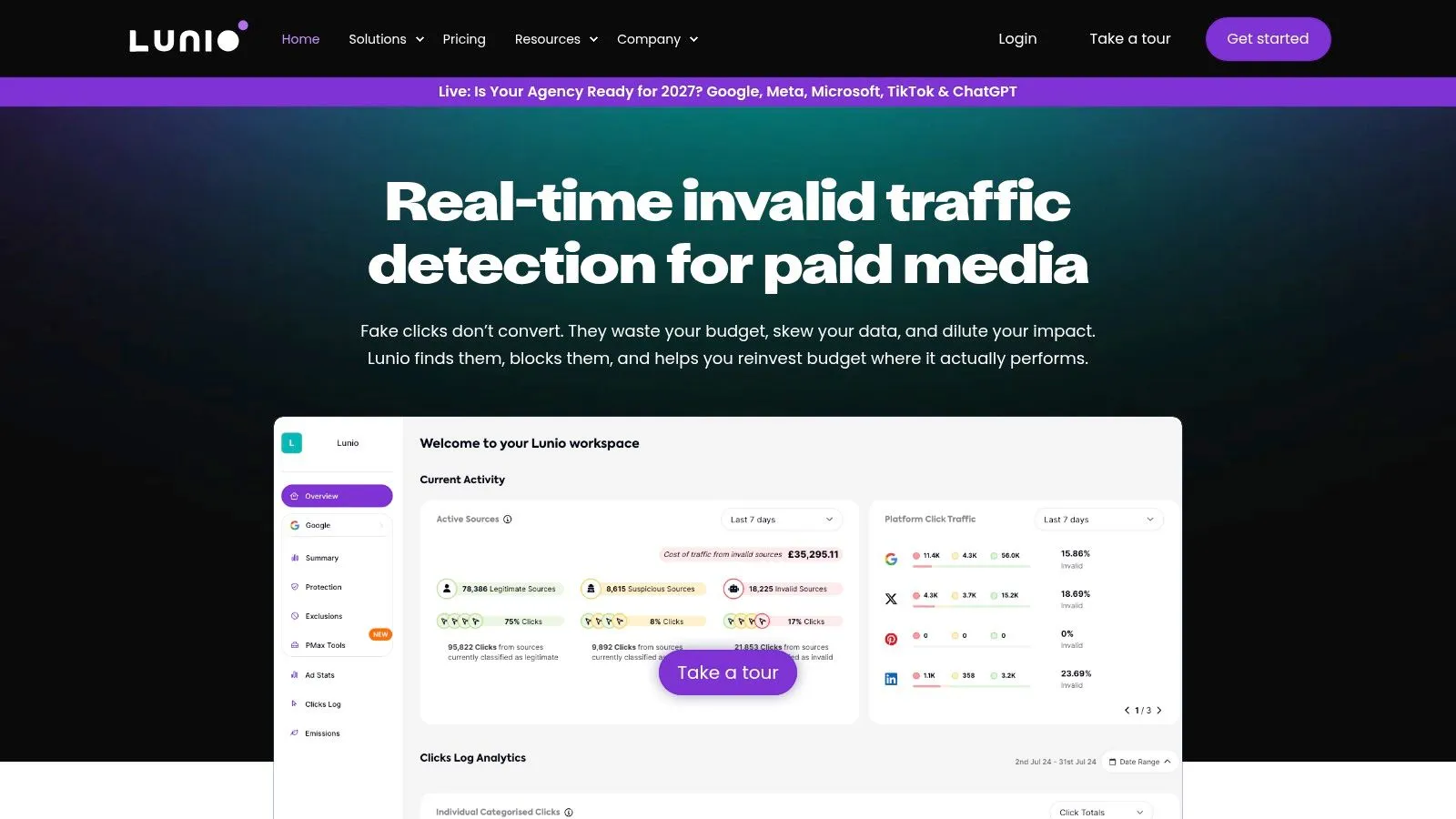
Lunio focuses on invalid traffic across paid-media channels, making it a practical candidate for performance teams and agencies managing campaigns across several networks. Its described support includes Google, Microsoft, Meta, LinkedIn, Reddit, and TikTok. Cross-platform exclusions, click-stream data, traffic reporting, multi-account workspaces, and user controls help teams review activity across accounts without treating each ad network as an isolated operation.
Lunio publishes pricing based on ad spend and channel coverage, although final pricing is customized. It also offers a traffic audit, which can help a buyer see whether the product identifies patterns worth investigating before expanding its use. That’s useful for campaign managers who want click-quality controls, but it doesn’t make Lunio a complete programmatic verification suite.
Keep channel reports in the comparison
Lunio doesn’t replace verification for connected TV, viewability, or brand suitability. A campaign can have cleaner click traffic and still have display impressions that weren’t in view or placements that don’t meet a manufacturer’s policy. Compare Lunio’s flagged activity with each platform’s own invalid-traffic reporting, and check that the exclusions map cleanly to your account structure.
For co-op programs, ask what detail the reports retain for dealer-level reconciliation. A network-wide summary may show that traffic is being filtered without identifying which dealer placements need review. Confirm data retention, export fields, and how cross-channel exclusions work before connecting multiple accounts. Visit Lunio to assess current supported platforms and pricing scope.
10. mFilterIt
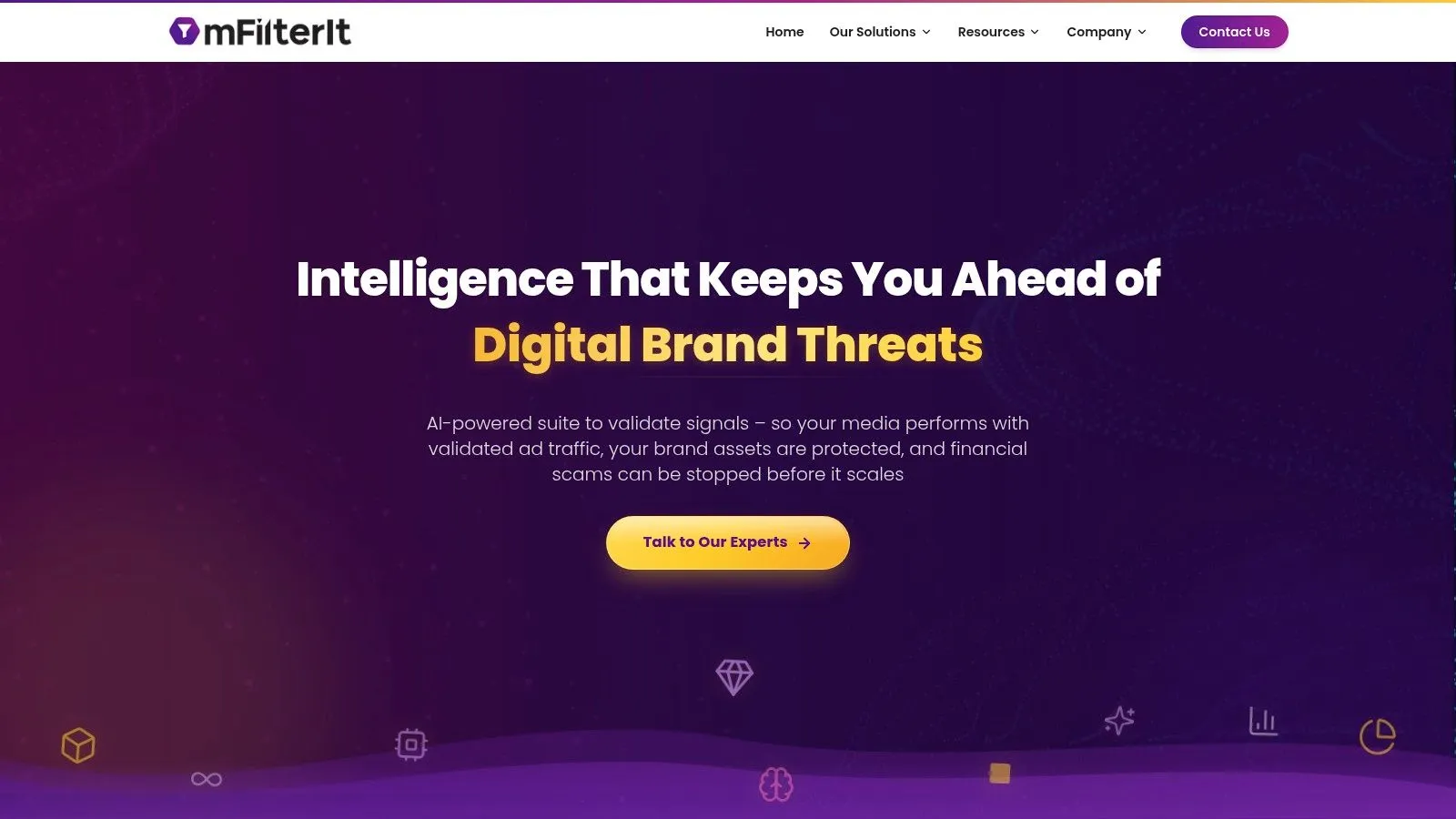
mFilterIt is the option to consider when the investigation needs to follow activity beyond the initial ad interaction. Its EffCent product validates traffic through landing-page behavior and lead submission, while its published workflows include Google Ads and Meta as well as affiliate, mobile, and app campaigns. That full-funnel view can help performance teams distinguish a suspicious click from a session that proceeds to a low-quality or fabricated lead.
The wider product portfolio also includes brand-safety and creative-compliance monitoring. That range may suit organizations that want to address traffic validation and brand protection with one provider, but buyers need to identify the specific module that covers their use case. Ask whether the workflow checks the exact advertiser or dealer requirements that matter, rather than assuming similarly named products produce the same evidence.
For a pilot: Give the vendor a campaign where your team already understands the landing page and lead path. Compare flagged clicks, sessions, and submissions with your own records.
Pricing isn’t publicly listed. Published performance statistics are company-reported, so evaluate them against your own campaign data and review false positives before applying exclusions or changing reimbursement decisions. A full-funnel signal is valuable only if the bureau can connect it to the right dealer, creative, and reporting period. Visit mFilterIt to confirm which modules and platform connections fit your requirements.
How the Ten Ad Verification Platforms Compare by Scope, Coverage, Pricing Visibility, and Fit
| Item | Primary Focus | Channel Coverage | Pricing Visibility | Best Fit |
|---|---|---|---|---|
| Integral Ad Science (IAS) | Media quality, fraud, viewability, brand safety | Open web, social, mobile, CTV | Not publicly listed | Teams seeking broad, multi-channel verification |
| DoubleVerify (DV) | Fraud, suitability, viewability, attention | Web, mobile, streaming, CTV; varies by integration | Enterprise-oriented; not publicly listed | Larger advertisers needing combined verification workflows |
| HUMAN Security, Ad Integrity and Advertising Protection | Sophisticated ad fraud and traffic authenticity | Programmatic impressions and ad clicks | Not publicly listed | Teams investigating sophisticated invalid traffic |
| Pixalate | Fraud and inventory quality | Websites, mobile apps, CTV | Free API account available; platform pricing unclear | Programmatic, app, or CTV inventory analysis |
| Zefr | Video and social brand safety and suitability | YouTube and other supported social and video platforms | Not publicly listed | Brands prioritizing content-level suitability on video and social |
| Protected by Mediaocean | Configurable fraud and viewability verification | Desktop, mobile web, mobile apps, CTV | Not publicly listed | Buyers and sellers seeking configurable multi-environment verification |
| Fraudlogix | Bot detection and traffic-risk controls | Programmatic, affiliate, and platform workflows | Sales-led; free tools available | Teams needing IP risk data and fraud controls |
| Anura | Bot, malware, click, and lead fraud detection | Paid search, social, affiliate, and lead-generation campaigns | Not publicly listed; trial by request | Advertisers focused on suspicious clicks, visits, or leads |
| Lunio | Invalid traffic across paid media | Google, Microsoft, Meta, LinkedIn, Reddit, TikTok, and others | Pricing structure published; final pricing customized | Performance teams managing campaigns across multiple ad networks |
| mFilterIt | Full-funnel traffic and lead validation | Google Ads, Meta, affiliate, mobile, and app campaigns | Not publicly listed | Performance teams investigating invalid traffic and lead quality |
Matching the Verification Tool to the Problem Before the Vendor Call
A vendor call is more useful once you can name the risk you need to measure. For invalid traffic, shortlist providers with pre-bid controls or post-bid analysis that explain why activity was flagged. For viewability, confirm the agreed measurement standard and the placement detail available in reports. For brand suitability, check whether the platform evaluates page content and supports manufacturer-specific policies. For click and lead quality, look for tools that assess activity beyond the first interaction and let your team review false positives.
Choose two or three vendors that address the same risk, then pilot them against your own dealer or campaign data. Keep the comparison consistent: use the same placements, period, and campaign conditions. Ask each vendor to define its denominator, sampling frame, exclusions, and methodology, and to distinguish pre-bid filtering from post-bid measurement. A lower fraud rate may reflect a narrower measured pool or a different definition, rather than better quality. The comparison of brand-safety and fraud tools can help frame questions, but the decision should rest on evidence and workflows your team can validate.
For bureaus and co-op managers, get reason codes, export formats, and accreditation details in writing. Each record should retain the vendor, methodology, timestamp, creative, placement, and reason for a block or flag. Reconcile those records with platform-native reporting, while keeping fraud, suitability, and low-attention outcomes distinct. That separation gives teams a clearer basis for explaining discrepancies to manufacturers without treating every quality issue as fraud.
Ad verification measures whether a placement met agreed standards. Dealer-site compliance reviews require a different capability: capturing pages and checking whether a specific creative, disclaimer, or brand treatment appeared. A managed data pipeline can complement verification by collecting page evidence and producing structured reports for recurring audits. WebscrapingHQ has delivered 1,680 dealer compliance reports per month for a U.S. verification bureau. For measurement questions, the IAB Tech Lab Open Measurement SDK describes standardized signals used to support third-party verification across digital environments.
For recurring dealer-page audits, WebscrapingHQ can capture rendered pages and produce structured compliance reports that document creative, placement, and brand-guideline exceptions. Teams considering a managed pipeline alongside ad verification tools can discuss the sources, fields, and delivery format their reporting workflow requires through WebscrapingHQ.
Want this done for you?
Send us the URLs. We'll quote it in 24 hours.
Paste the URL(s) you want scraped. We'll reply within 24 hours with a feasibility check and a ballpark quote.